Lekcja gitary
Rocksaw na gitarze.
Lekcja we własnym tempie o Rocksaw z Bro by Bro: pomiary BabylonTone, interaktywna mapa podstrunnicy i krótki quiz. Notatki oznaczone jako zmierzone pochodzą z analizy zapowiedzi. Notatki oznaczone jako wywnioskowane to interpretacje dydaktyczne do sprawdzenia uchem. Lekcja działa tu sama. W LMS ten sam pakiet może zapisać quiz.
Pobierz pakiet SCORM 1.2Otwórz kartę brzmienia Rocksaw
Karta brzmienia
Karta brzmienia Rocksaw
Jednostronicowy zrzut ze zmierzonymi wartościami z podglądu i wywnioskowanymi punktami wyjścia dla wzmacniacza, gitary, przetworników i kostek. Ustawienia to punkty wyjścia, a nie sprzęt artysty.
Te ustawienia to punkty wyjścia według rodzaju sprzętu, z ogólnymi pozycjami pokręteł od 0 do 10 (południe to 5). To nie jest twierdzenie, że artysta używał tych ustawień albo konkretnego instrumentu, wzmacniacza czy kostki. Nie opublikowano oficjalnych akordów ani tabulatur. Liczby pochodzą z oficjalnego 30-sekundowego podglądu (około 12% utworu; nie wiadomo, z którego miejsca utworu).
Szczegóły ustawień na tej karcie brzmienia są po angielsku, dopóki nie będzie tłumaczenia native speakera.
- ZmierzoneZ analizy podglądu
- WywnioskowanePunkt wyjścia albo interpretacja dydaktyczna — sprawdź słuchem
- Od artystyBrak informacji o sprzęcie tego utworu
Pobierz jednostronicowy PDFOtwórz pełną kartę brzmienia Rocksaw
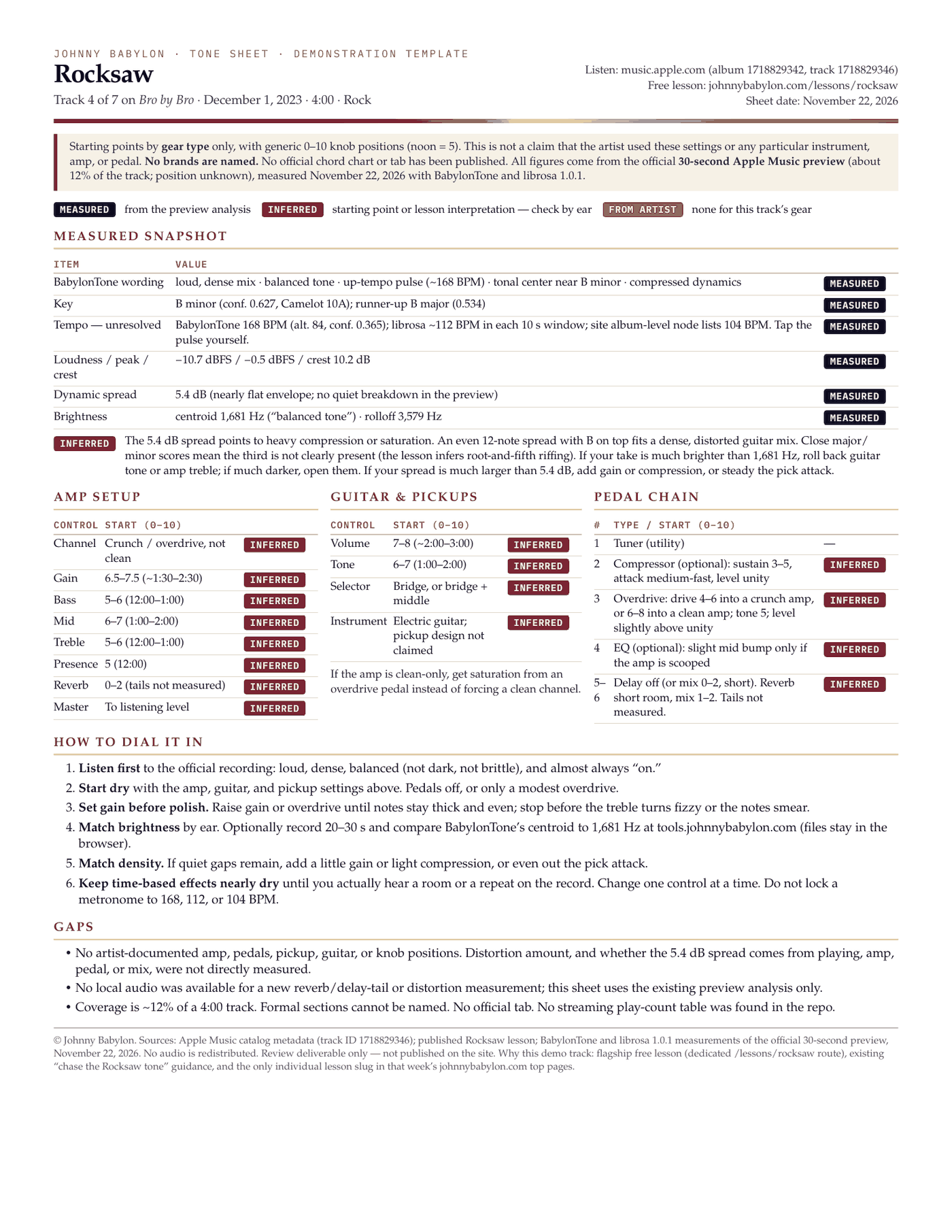
Zmierzony zrzut
| Pozycja | Wartość | Oznaczenie |
|---|---|---|
| BabylonTone wording | loud, dense mix · balanced tone · up-tempo pulse (~168 BPM) · tonal center near B minor · compressed dynamics | Zmierzone |
| Key | B minor (conf. 0.627, Camelot 10A); runner-up B major (0.534) | Zmierzone |
| Tempo — unresolved | BabylonTone 168 BPM (alt. 84, conf. 0.365); librosa ~112 BPM in each 10 s window; site album-level node lists 104 BPM. Tap the pulse yourself. | Zmierzone |
| Loudness / peak / crest | −10.7 dBFS / −0.5 dBFS / crest 10.2 dB | Zmierzone |
| Dynamic spread | 5.4 dB (nearly flat envelope; no quiet breakdown in the preview) | Zmierzone |
| Brightness | centroid 1,681 Hz (“balanced tone”) · rolloff 3,579 Hz | Zmierzone |
Wywnioskowane The 5.4 dB spread points to heavy compression or saturation. An even 12-note spread with B on top fits a dense, distorted guitar mix. Close major/minor scores mean the third is not clearly present (the lesson infers root-and-fifth riffing). If your take is much brighter than 1,681 Hz, roll back guitar tone or amp treble; if much darker, open them. If your spread is much larger than 5.4 dB, add gain or compression, or steady the pick attack.
Ustawienie wzmacniacza
| Regulator | Punkt wyjścia (0–10) | Oznaczenie |
|---|---|---|
| Channel | Crunch / overdrive, not clean | Wywnioskowane |
| Gain | 6.5–7.5 (~1:30–2:30) | Wywnioskowane |
| Bass | 5–6 (12:00–1:00) | Wywnioskowane |
| Mid | 6–7 (1:00–2:00) | Wywnioskowane |
| Treble | 5–6 (12:00–1:00) | Wywnioskowane |
| Presence | 5 (12:00) | Wywnioskowane |
| Reverb | 0–2 (tails not measured) | Wywnioskowane |
| Master | To listening level | Wywnioskowane |
Gitara i przetworniki
| Regulator | Punkt wyjścia (0–10) | Oznaczenie |
|---|---|---|
| Volume | 7–8 (~2:00–3:00) | Wywnioskowane |
| Tone | 6–7 (1:00–2:00) | Wywnioskowane |
| Selector | Bridge, or bridge + middle | Wywnioskowane |
| Instrument | Electric guitar; pickup design not claimed | Wywnioskowane |
If the amp is clean-only, get saturation from an overdrive pedal instead of forcing a clean channel.
Łańcuch kostek
| Kolejność | Typ i punkt wyjścia (0–10) | Oznaczenie |
|---|---|---|
| 1 | Tuner (utility) | — |
| 2 | Compressor (optional): sustain 3–5, attack medium-fast, level unity | Wywnioskowane |
| 3 | Overdrive: drive 4–6 into a crunch amp, or 6–8 into a clean amp; tone 5; level slightly above unity | Wywnioskowane |
| 4 | EQ (optional): slight mid bump only if the amp is scooped | Wywnioskowane |
| 5–6 | Delay off (or mix 0–2, short). Reverb short room, mix 1–2. Tails not measured. | Wywnioskowane |
Jak to ustawić
- Listen first to the official recording: loud, dense, balanced (not dark, not brittle), and almost always “on.”
- Start dry with the amp, guitar, and pickup settings above. Pedals off, or only a modest overdrive.
- Set gain before polish. Raise gain or overdrive until notes stay thick and even; stop before the treble turns fizzy or the notes smear.
- Match brightness by ear. Optionally record 20–30 s and compare BabylonTone’s centroid to 1,681 Hz at tools.johnnybabylon.com (files stay in the browser).
- Match density. If quiet gaps remain, add a little gain or light compression, or even out the pick attack.
- Keep time-based effects nearly dry until you actually hear a room or a repeat on the record. Change one control at a time. Do not lock a metronome to 168, 112, or 104 BPM.
Luki
- No artist-documented amp, pedals, pickup, guitar, or knob positions. Distortion amount, and whether the 5.4 dB spread comes from playing, amp, pedal, or mix, were not directly measured.
- No local audio was available for a new reverb/delay-tail or distortion measurement; this sheet uses the existing preview analysis only.
- Coverage is about 12% of a 4:00 track. Formal sections cannot be named. No official tab. No streaming play-count table was found in the repo.